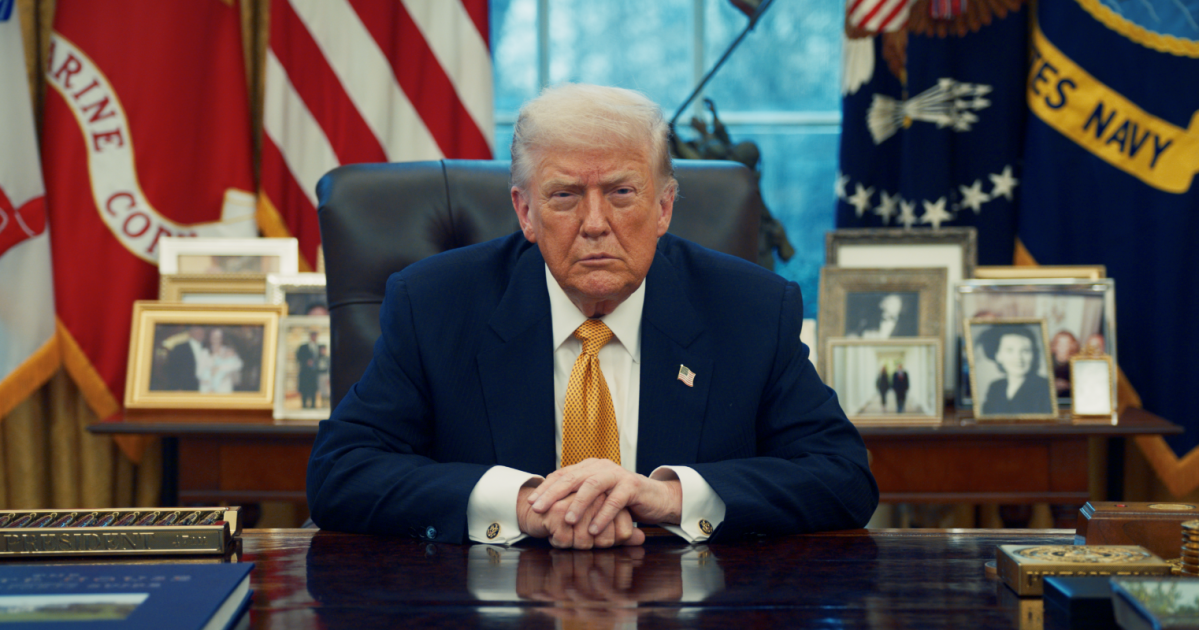
The Insurrection Act is one of the most powerful—and least understood—laws in the American legal system. Enacted in the early years of the republic, it grants the president authority to deploy military forces within the United States under specific circumstances. Though rarely used, the statute has resurfaced in political discourse as former President Donald Trump and his allies have suggested it could be invoked to restore order amid civil unrest or resistance to federal policy.
At its core, the Insurrection Act exists as an exception to a long-standing principle of American governance: that the military should not be used for domestic law enforcement. That principle was formalized in the Posse Comitatus Act of 1878, which generally prohibits federal armed forces from carrying out civilian policing duties. The Insurrection Act carves out a narrow—but significant—escape hatch from that rule.
The law, originally passed in 1792 and expanded over the next century, allows a president to deploy troops if state authorities are unable or unwilling to protect constitutional rights, suppress insurrection, or enforce federal law. Unlike many modern statutes, its language is broad and, by today’s standards, imprecise. Terms such as “insurrection,” “domestic violence,” and “unlawful obstruction” are not clearly defined, leaving substantial discretion in the hands of the executive branch.
Historically, presidents have used the Insurrection Act sparingly. One of its most well-known applications came during the civil-rights era, when federal troops were sent to enforce desegregation orders in Southern states that openly defied federal court rulings. In those cases, the act was used not to suppress protest, but to uphold constitutional rights when state governments refused to do so.
The most recent large-scale invocation occurred in 1992, when President George H. W. Bush deployed federal troops to Los Angeles following riots sparked by the acquittal of police officers involved in the beating of Rodney King. Local law enforcement had been overwhelmed, and the governor of California formally requested federal assistance. Even then, the decision was controversial, underscoring how extraordinary such a step remains.
Donald Trump’s comments about the Insurrection Act have revived debate about whether the statute could be used more aggressively—or more politically—than in the past. During periods of protest, immigration enforcement clashes, or disputes between federal and state authorities, Trump has suggested that military intervention might be necessary to ensure order or compliance with federal law.
Legally speaking, the president does possess wide latitude under the act. Courts have historically been reluctant to second-guess a president’s determination that conditions warrant its use. Early Supreme Court decisions treated the question of whether an insurrection exists as a political judgment rather than a legal one, placing it largely beyond judicial review.
However, legal scholars caution that broad discretion does not mean unlimited power. Modern constitutional law places far greater emphasis on civil liberties, due process, and proportionality than it did in the nineteenth century. A president who invoked the Insurrection Act in circumstances that fell short of genuine breakdowns in civil order would almost certainly face immediate legal challenges from states, municipalities, and civil-rights organizations.
Beyond legality, there are serious practical concerns. Active-duty military personnel are trained for combat and national defense, not civilian policing. Deploying troops into American cities risks escalating tensions rather than calming them, particularly when protests involve political or social grievances. Past experiences suggest that military presence can harden opposition and undermine public trust in both government and law enforcement.
There is also a significant federalism question at stake. The United States is built on a balance of power between the federal government and the states. Using the Insurrection Act without the consent—or over the objections—of state leaders could be seen as a dramatic expansion of federal authority, setting precedents that future presidents might exploit in less justifiable circumstances.
Supporters of a strong executive argue that the act remains a necessary safeguard against chaos, rebellion, or systemic refusal to enforce federal law. They point out that the Constitution obligates the federal government to guarantee every state a republican form of government and to protect citizens’ rights when states fail to do so. From this perspective, the Insurrection Act is not a threat to democracy but a tool to preserve it.
Critics counter that the law’s vagueness is precisely what makes it dangerous. A statute written for a young republic facing armed uprisings may not be well suited to a modern society grappling with political polarization, mass protests, and instantaneous media coverage. Without clearer limits or congressional oversight, they argue, the act leaves too much room for abuse.
Congress has periodically discussed reforming the Insurrection Act, including proposals that would require notification, time limits, or judicial review when it is invoked. None of these reforms have been enacted, leaving the statute largely unchanged for over a century. As a result, its use continues to depend more on political norms and restraint than on explicit legal guardrails.
Ultimately, the question of whether a president can use the Insurrection Act is less important than whether he should. The law was designed as a measure of last resort, intended for moments when civil government has truly broken down. Using it in less extreme circumstances risks normalizing military involvement in domestic affairs—a step that many Americans, across the political spectrum, have long viewed with deep unease.
As debates over federal authority, public order, and civil liberties continue, the Insurrection Act stands as a reminder that extraordinary powers exist within the American system. How those powers are used—or restrained—will shape public trust in government and the boundaries of executive authority for generations to come.
This article has been spell-checked and reviewed for punctuation by artificial intelligence.