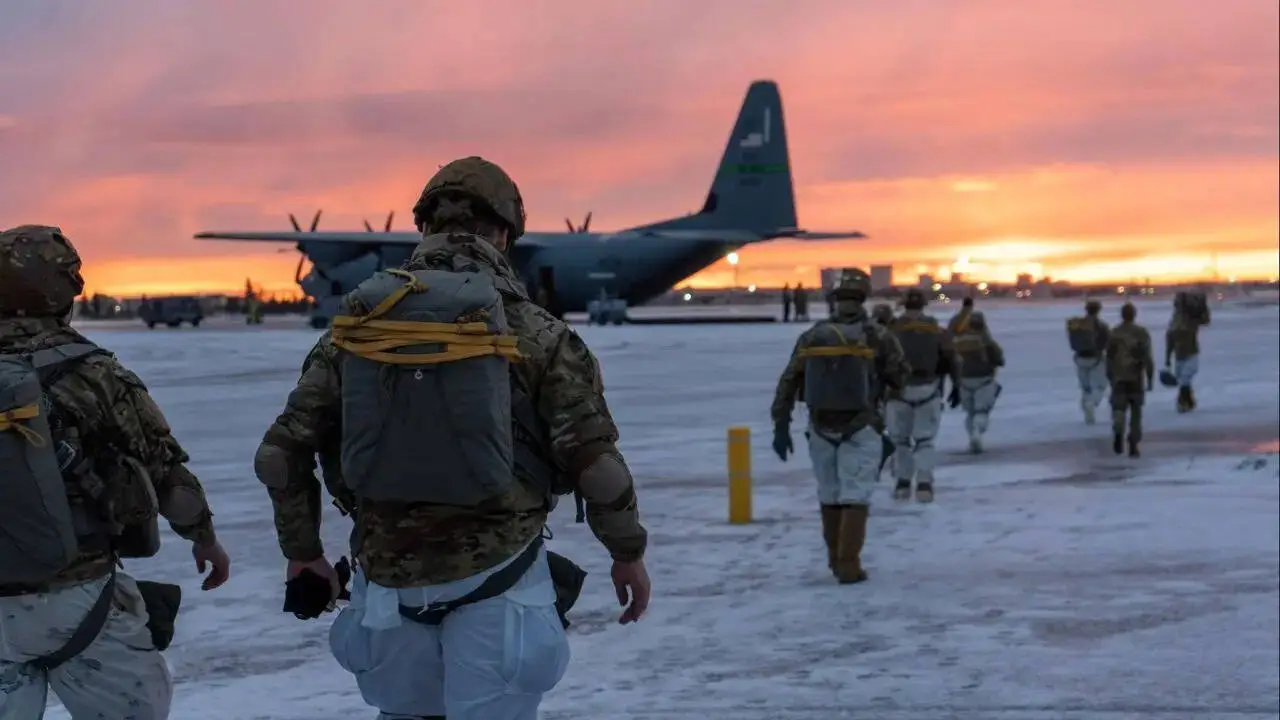
Federal and state authorities have placed military forces on standby as protests continue in Minneapolis following recent federal law-enforcement actions. The Pentagon confirmed that approximately 1,500 active-duty U.S. Army soldiers have been directed to prepare for possible deployment to Minnesota should conditions require additional support beyond local and state resources.
The active-duty troops identified for potential deployment are assigned to the Army’s 11th Airborne Division, based in Alaska. Defense officials stated that these soldiers remain at their home installations and have not been ordered to deploy. The readiness posture is intended to ensure that federal authorities have options available if circumstances deteriorate or if additional assistance is formally requested.
At the state level, Minnesota Governor Tim Walz has authorized the Minnesota National Guard to remain on heightened alert. Guard leadership has indicated that while some personnel have been mobilized, they are not broadly deployed on Minneapolis streets and are instead positioned to assist with logistics, infrastructure protection, and support roles if needed.
State officials emphasized that the National Guard’s mission, should it be expanded, would focus on protecting life and property, supporting emergency services, and preserving public order. Guard members are not intended to replace local law enforcement but to provide additional capacity during periods of sustained activity or strain on public safety resources.
The preparations come amid ongoing demonstrations connected to federal immigration enforcement operations in the Minneapolis area. Public protests have continued for several weeks, drawing participants with a range of viewpoints. While many demonstrations have been peaceful, some incidents of property damage and confrontations have prompted increased attention from local, state, and federal authorities.
Federal officials have characterized the placement of active-duty troops on standby as a routine contingency measure. Defense Department representatives noted that such planning does not indicate an imminent deployment but allows for a faster response if a formal decision is made by civilian leadership.
The potential involvement of active-duty military forces in domestic situations is governed by federal law, including the Insurrection Act. That statute allows the president, under specific conditions, to deploy armed forces within the United States to address civil disorder or enforce federal law. No invocation of the act has been announced, and federal officials have stressed that no decision has been made to deploy active-duty troops to Minneapolis.
Minnesota state leaders have stated that they remain focused on managing the situation using state and local resources. Governor Walz has urged calm and restraint, emphasizing the importance of protecting constitutional rights, including the right to peaceful assembly, while also ensuring public safety for residents, businesses, and demonstrators.
Local officials have echoed those sentiments, noting that coordination among city agencies, state authorities, and federal partners is ongoing. Minneapolis leaders have stated that maintaining clear communication between agencies is essential to preventing misunderstandings and minimizing the risk of escalation.
The possibility of federal military involvement has prompted discussion among legal scholars and policy analysts. Experts note that while active-duty troops can legally be used in domestic situations under certain circumstances, such deployments are relatively rare and often raise questions about appropriate roles, oversight, and the balance between security and civil liberties.
Civil liberties organizations have emphasized the importance of transparency and clearly defined rules of engagement should military forces be used in any capacity. They argue that public trust depends on clear explanations of authority, mission scope, and accountability mechanisms.
Supporters of contingency planning, meanwhile, argue that preparedness does not necessarily signal intent to deploy but reflects an effort to ensure that government institutions are ready to respond to a wide range of potential scenarios. They note that prolonged unrest can strain local resources and that advance planning may help prevent more severe outcomes.
Historically, Minnesota has relied primarily on state and local responses to manage large-scale demonstrations and emergencies. The National Guard has previously been activated to assist during natural disasters, public health emergencies, and periods of civil unrest, typically in supporting roles rather than direct law enforcement.
The current situation highlights the complex relationship between federal authority and state responsibility. While federal agencies have jurisdiction to enforce federal law, states retain primary responsibility for public safety within their borders. Effective coordination between these levels of government is often cited as a key factor in maintaining stability during periods of heightened tension.
Officials have stated that ongoing assessments will guide future decisions regarding troop readiness and deployment. Factors under consideration include the scale and duration of protests, the capacity of local and state agencies, and the overall safety environment.
Residents are encouraged to rely on official information sources and to remain aware of public safety guidance issued by city and state authorities. Law enforcement agencies have asked the public to avoid speculation and misinformation as the situation continues to evolve.
As of now, both the National Guard and active-duty military units remain in a standby posture. No timeline has been provided for how long the readiness measures will remain in effect, and officials have stated that any changes will be communicated publicly.
The developments in Minneapolis reflect broader national discussions about public safety, protest activity, and the appropriate use of government authority during periods of unrest. How these issues are addressed in the coming weeks may inform future responses at both the state and federal levels.
For Minnesota leaders, the stated priority remains balancing public safety with the protection of constitutional rights. Officials have reiterated that decisions will continue to be guided by evolving conditions, legal frameworks, and the goal of maintaining stability while respecting the rights of all individuals involved.
This article has been spell-checked and reviewed for punctuation by artificial intelligence.