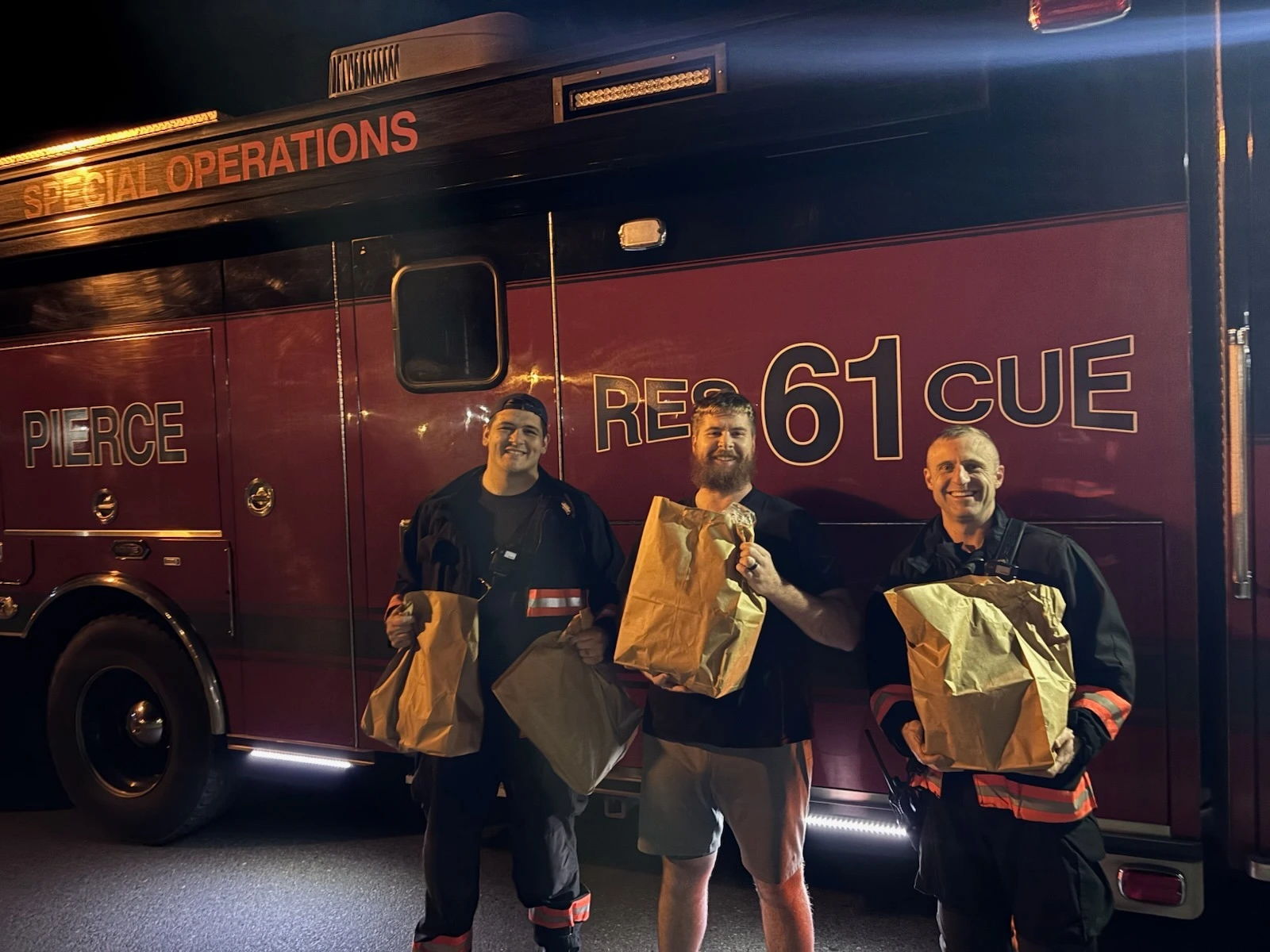
The news rarely gives us time to breathe anymore. Each day seems to arrive with another headline urging outrage, another story framed as proof that we’re more divided than ever. It can leave people tired, guarded, and unsure what—if anything—still holds us together.
And yet, every once in a while, a simple story breaks through the noise. Not because it’s dramatic or controversial, but because it feels quietly familiar. Human. Grounded. True.
That’s what happened recently in Washington state, when firefighters responded to a routine traffic accident. No major injuries. No dramatic rescue. Just the kind of call first responders handle every day.
The driver involved had just finished grocery shopping. The crash left the bags torn open, food damaged, and a week’s worth of meals suddenly unusable. It’s the kind of detail that might seem small in the middle of an emergency—but it matters when you’re the one standing there, shaken, trying to figure out how you’re going to get through the next few days.
Once the scene was secure and everyone was safe, the firefighters noticed the groceries. They could have packed up and moved on. Their job, strictly speaking, was already done.
Instead, they did something unexpected.
They took the grocery list, returned to the store, and replaced the food themselves. No request from the driver. No obligation. Just a quiet decision to help someone who’d had a bad day become a little less overwhelmed.
It’s not the kind of story that changes the world overnight. No laws were passed. No debates settled. And yet, it changes something just as important.
It reminds us that community still exists—not as a slogan, but as a lived experience. Community shows up when people see a need and decide it’s theirs to meet, even if no one is watching.
We often talk about public service in abstract terms. Budgets. Policies. Institutions. But at its core, service is deeply personal. It’s about recognizing another person’s dignity and responding with care.
The firefighters involved didn’t see a problem that belonged to “someone else.” They saw a neighbor. A family. A moment where a little effort could make a real difference.
Stories like this resonate because they feel familiar. Most of us have either been helped in a moment like that—or wished someone had noticed. We remember the people who showed up when they didn’t have to.
In Minnesota, we understand this instinct well. It’s there when a stranger helps push a car out of the snow. When neighbors check on each other during a power outage. When a community rallies quietly around a family going through a hard season.
These moments rarely make the front page. They don’t trend online. But they are the threads that hold communities together long after the headlines fade.
It’s easy to believe, if we only follow the loudest voices, that everything is broken beyond repair. Stories like this offer a gentle correction. They remind us that decency hasn’t disappeared—it’s just not shouting.
This story isn’t about politics, and it doesn’t need to be. Compassion doesn’t belong to one party or ideology. Responsibility isn’t partisan. Neither is the instinct to help someone in need.
What these firefighters demonstrated is something older and sturdier than any current debate: the idea that we are responsible for one another, especially when circumstances collide with ordinary life.
If we want stronger communities, we won’t find them by waiting for perfect systems or perfect leaders. We’ll find them in everyday decisions made by ordinary people—decisions to act with kindness, patience, and quiet integrity.
That’s how trust is rebuilt. Not through speeches or slogans, but through consistent, human actions that remind us we’re not alone.
A bag of groceries won’t fix everything. But sometimes, it fixes exactly what needs fixing in that moment. And sometimes, that’s more than enough.
Stories like this deserve to be shared—not because they’re extraordinary, but because they show us what should be normal.
In a world that often feels loud and divided, it’s worth remembering how much good still happens quietly, every single day.
This article has been spell-checked and reviewed for punctuation by artificial intelligence.